
Your Financial Prime Directive: The Mission Control Guide
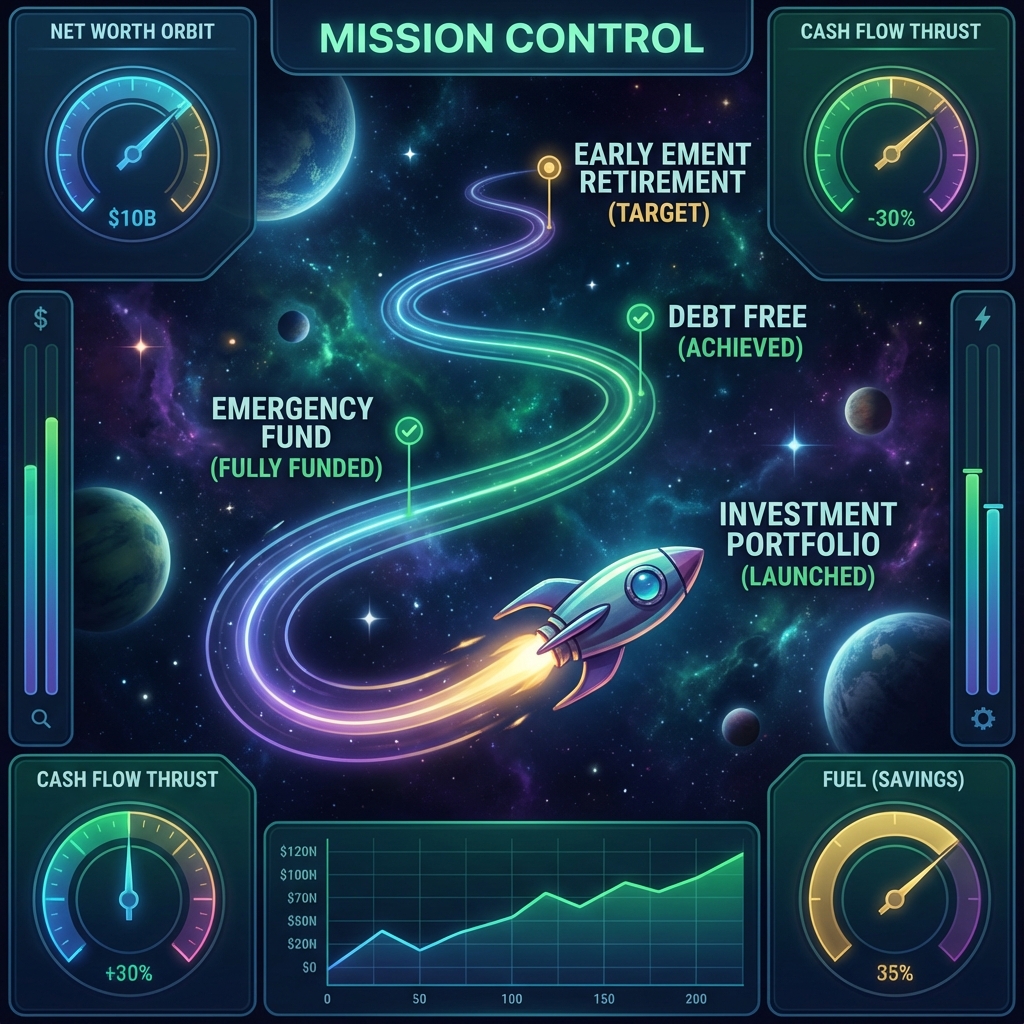
Use Mission Control to decide what to do next with extra cash: build a buffer, capture employer match, pay down expensive debt, or fund longer-term goals.
The Problem: Extra Money Still Needs a Job
Finding an extra $500 should feel simple, but it often creates a harder question: what should you do with it first? Put it toward a credit card, keep it in checking, move it to savings, catch up on a bill, or invest it for later?
Most finance apps answer a different question. They show where money already went. That is useful, but it does not tell you whether today's next dollar should protect this month, reduce debt, or build long-term optionality.
Mission Control is BillForecast's way of turning your current balances, upcoming bills, recurring income, and debt profile into a practical next step. It is not a promise that one rule fits everyone. It is a decision aid that keeps urgent cash-flow risk from getting buried under a long list of possible goals.
The Order of Operations
The framework is inspired by the common personal-finance "prime directive": stabilize the basics first, capture obvious guaranteed value, then move toward higher-growth goals. In BillForecast terms, that becomes a sequence of checkpoints:
- Protect the next few weeks. If the forecast shows an upcoming low-balance day, the first job is avoiding fees, missed bills, and emergency borrowing.
- Build a starter buffer. A small cash cushion gives recurring bills room to land even when income timing shifts.
- Capture employer match. If you have access to a retirement match, that can be one of the clearest returns available.
- Attack expensive debt. Credit cards and high-rate loans often deserve priority because the interest cost compounds against you.
- Expand resilience. Once urgent pressure is gone, grow the buffer toward several months of essential expenses.
- Fund longer-term goals. After the near-term risk is covered, investing, extra debt payoff, and savings goals become easier to compare calmly.
How BillForecast Uses Your Forecast
The important difference is timing. A budget category can say you are under budget for the month while your cash-flow forecast shows rent, insurance, and a card payment all landing before the next paycheck. Mission Control looks at that timing before recommending an action.
For example, a user with $500 available today might still be projected to dip below zero in nine days. In that case, the "best" move is probably not an extra loan payment. It is holding enough cash to clear the upcoming obligation, then applying the leftover amount where it creates the most value.
If the runway is healthy, Mission Control can safely move down the checklist. That is when it makes sense to compare high-interest debt, savings goals, and recurring commitments instead of treating every extra dollar as generic surplus.
A Practical Weekly Routine
Use Mission Control as a short weekly review, not a once-a-year planning exercise:
- Check the lowest projected balance. This tells you whether the next few weeks are safe.
- Review unpaid or unapproved items. Forecasts are only useful when upcoming obligations are represented honestly.
- Assign extra cash deliberately. Decide whether the next dollar protects liquidity, reduces interest, or funds a goal.
- Re-check after the decision. A good choice should improve the forecast without creating a new shortfall.
Why This Beats Guesswork
Personal finance gets stressful when every decision feels isolated. Mission Control gives each decision context: what bills are coming, how much cash remains after them, and which action has the clearest payoff right now.
That does not remove judgment. It gives your judgment better inputs. Instead of asking "what should I do with money?" in the abstract, BillForecast helps you ask "what should this money do before my next few obligations land?" That is the question that keeps plans accurate.